Merit-based systems are widely regarded as the cornerstone of good governance. When opportunities are distributed in a transparent and equitable manner, public trust in institutions grows, institutions themselves become stronger, and young talent is encouraged to play a meaningful role in society. In regions facing persistent developmental challenges, the restoration of merit is not merely an administrative reform but a process that fosters long-term stability and confidence.
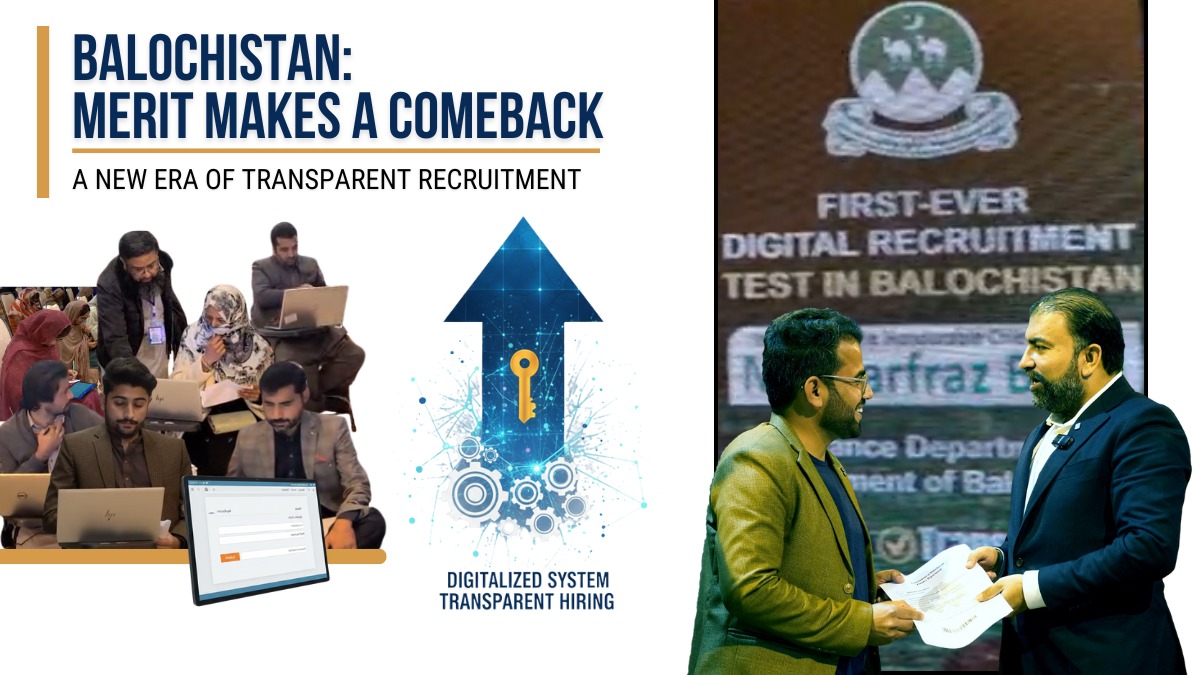
One of the most striking aspects of this shift has been the active engagement and visible oversight demonstrated by Chief Minister Balochistan Mir Sarfaraz Bugti. His recent presence at the Finance Department’s recruitment test was widely viewed as a symbolic yet highly significant gesture. By personally observing the examination process, the Chief Minister sent a clear message: merit-based recruitment is not a rhetorical commitment, but a priority pursued at the highest level of government.
Under the leadership of Mir Sarfaraz Bugti, the provincial government has introduced a comprehensive, merit-driven and fully digitalized recruitment system, beginning with the Finance Department of Balochistan. Applications for government positions are now processed online, computer-based testing has been introduced, and results are published transparently. These measures aim to minimize human intervention and reduce the scope for manipulation in recruitment.
This initiative represents more than an administrative adjustment; it marks a symbolic transformation in the culture of governance. It signals a decisive departure from the long-standing practices of favoritism, political patronage, and informal channels. The adoption of online testing and the prompt issuance of appointment letters reflect a serious effort to close the loopholes that have historically undermined merit.
The significance of this reform extends far beyond a limited number of vacancies. In a province where unemployment and frustration among educated youth have often translated into alienation and disillusionment, merit-based hiring restores hope in the state. It reassures young graduates that diligence, competence, and qualifications will be recognized and rewarded.
Equally important is the government’s commitment to expanding this system to other departments, indicating that the reform is institutional rather than cosmetic. If implemented consistently, it could mark a turning point in the administrative culture of Balochistan.
Merit is gradually reclaiming its place in a region long affected by governance challenges. The real test, however, lies ahead: ensuring sustainability, political neutrality, and continuous expansion. If maintained, this reform has the potential to become one of the most significant governance transformations in Balochistan’s recent history.